Echoes of the Past
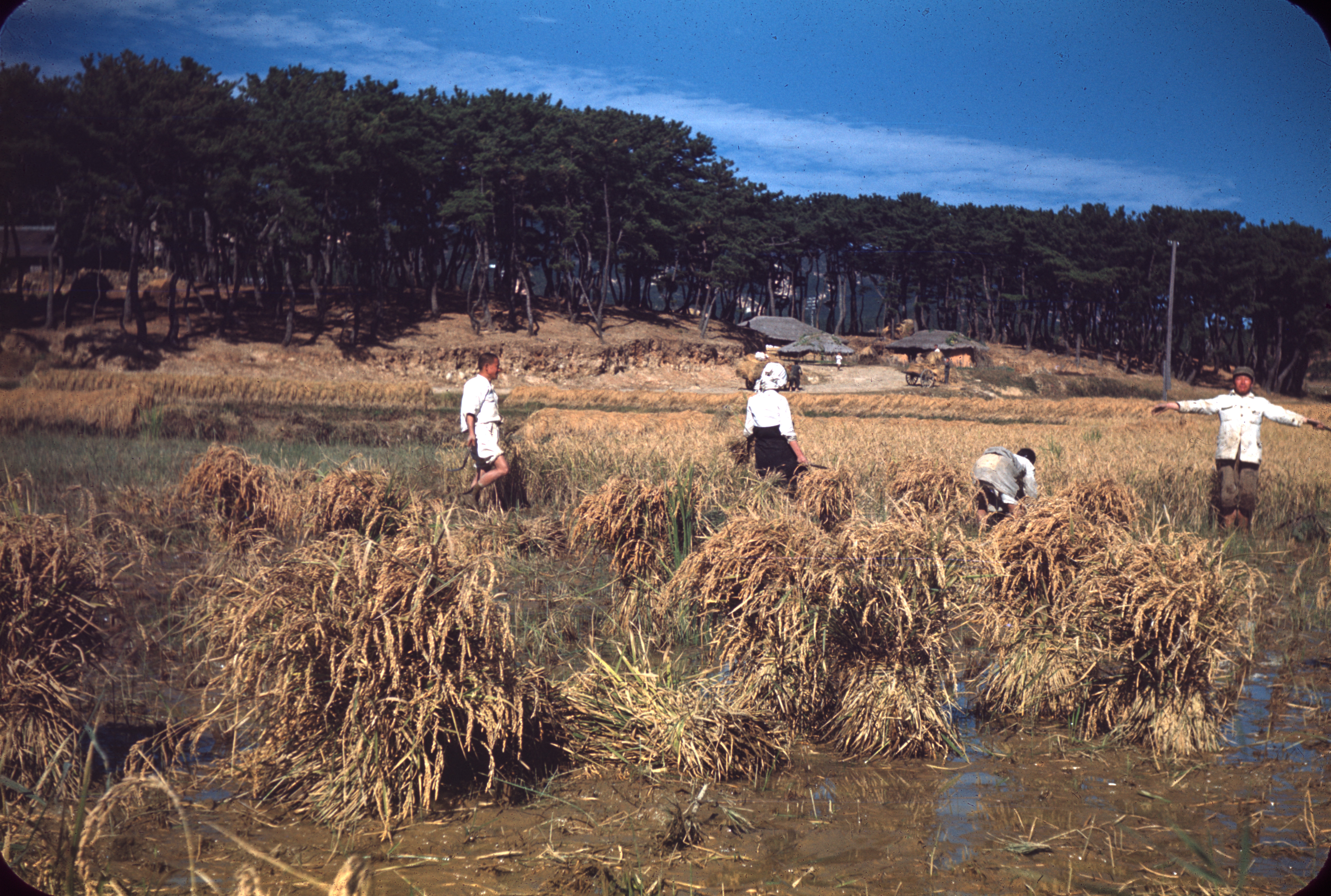
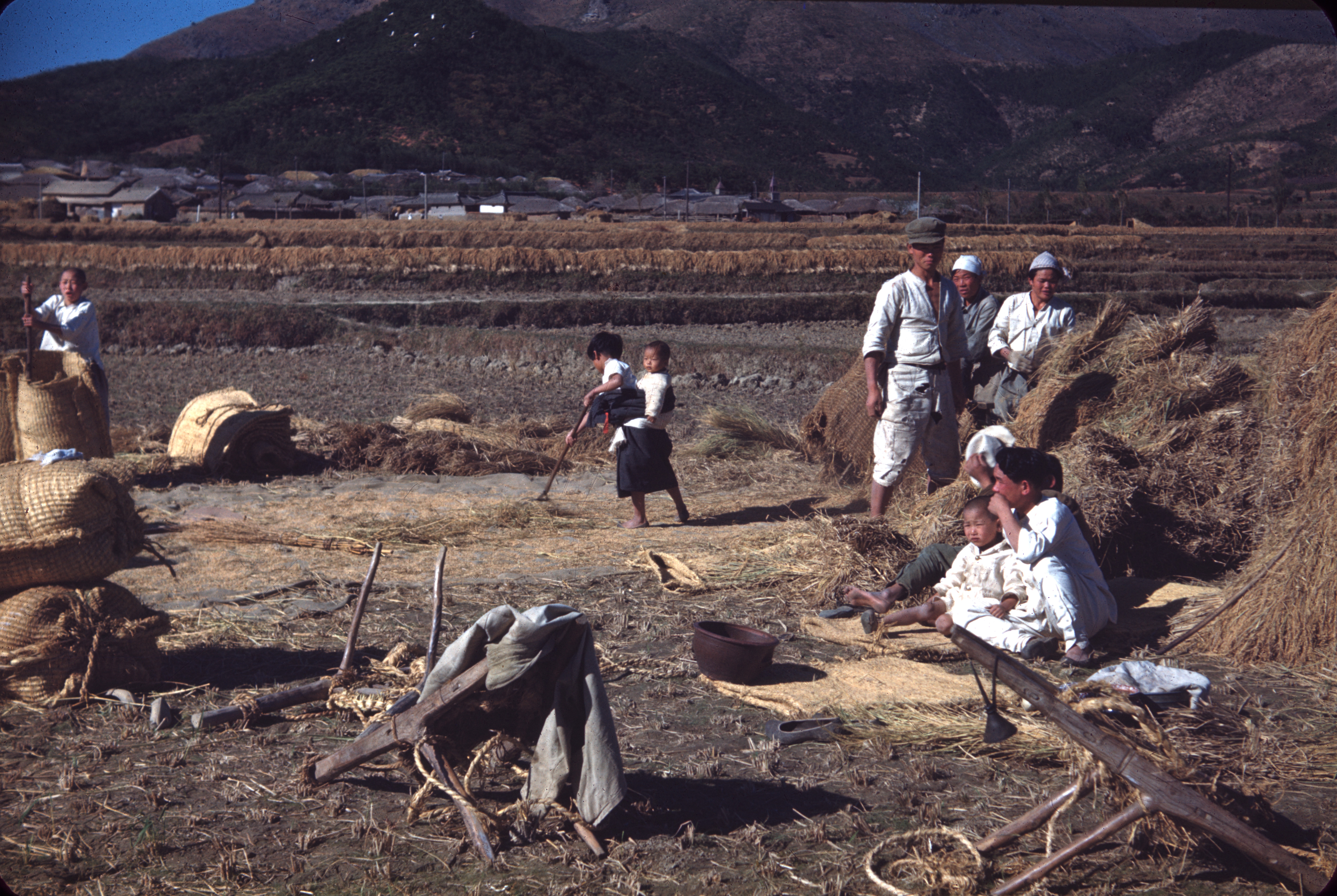
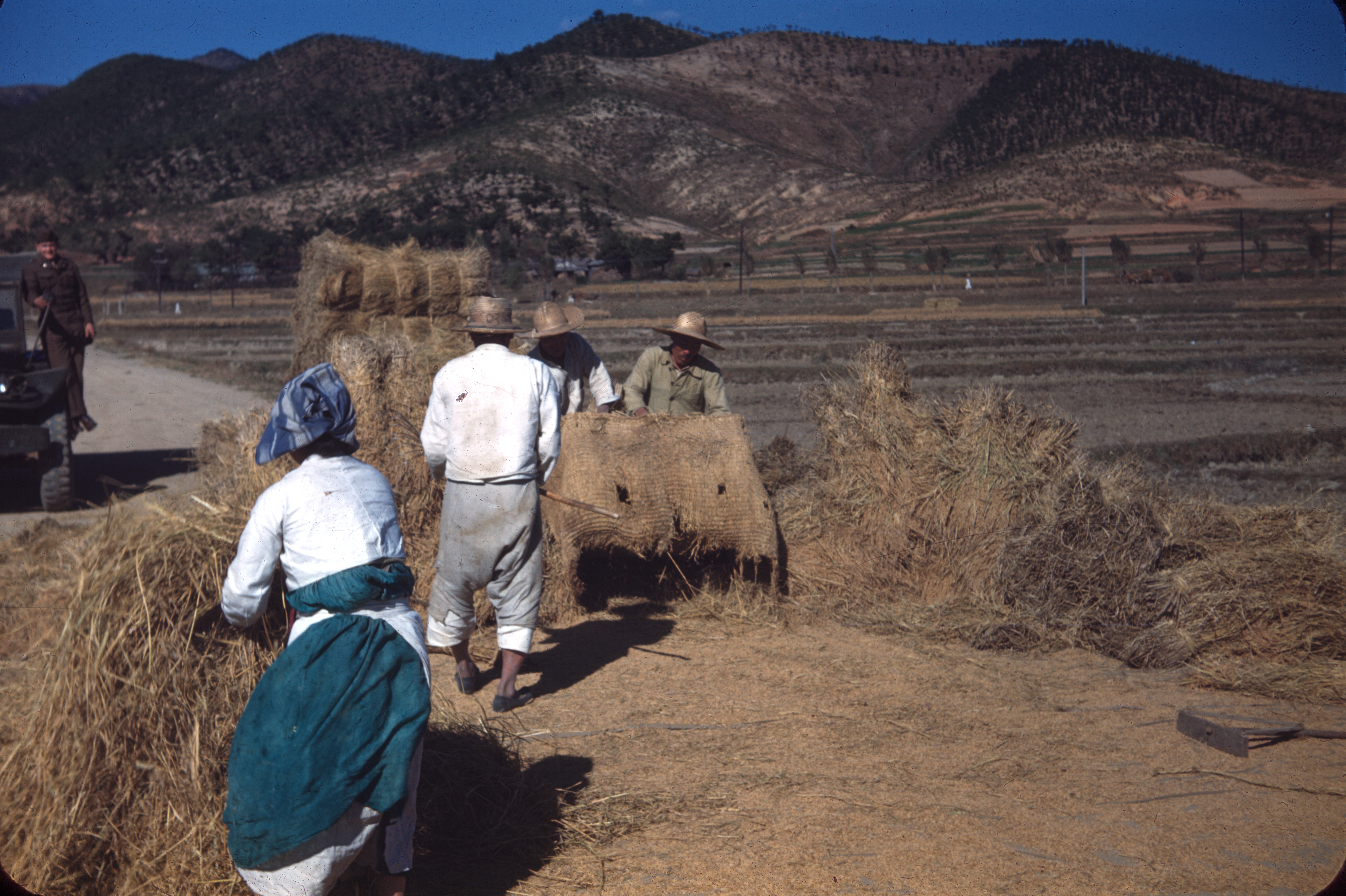
Gleaning. A word that smells of the earth, an ancestral gesture: that of picking up the forgotten ears of wheat after the harvest, what others have left behind. After the Korean War (1950–1953), the wheat fields became fields of ruins, but the gesture remained, it transformed. From the earth to the asphalt, from ears of wheat to debris, it became the symbol of small survival jobs born of necessity.
These archives build a bridge between the ragpickers of yesterday and the cardboard gleaners of today. They tell how, in the shadow of an economic miracle, survival reinvented itself, leaving behind traces of the past in our present.
The Flowers of Evil
1. 1953 - Born from the Ruins
When the silence of weapons succeeds three years of horror, the city is nothing more than a field of ruins. Nearly 191,000 buildings, 55,000 houses, and 1,000 factories were destroyed during the Korean War, according to the reports of the United Nations Commission for the Unification and Rehabilitation of Korea (UNCURK, 1953). The streets of Seoul, once swarming with life, are now invaded by rubble, mourning mothers, and wandering children, the buranga (부랑아), literally "vagrant children".


From the end of the conflict, more than half of the city's inhabitants are homeless, seeking refuge in gutted buildings and improvised tents. The population of Seoul exceeds 2.5 million, partly due to the massive arrival of displaced persons from the North and the countryside, seeking shelter in the capital. Poverty is nevertheless endemic, with more than 40% of industrial infrastructures annihilated. To survive in a country brought to its knees, informal networks of waste collection appear: young men, elderly women, widows, but also orphans, roam the ruins, sometimes with burlap sacks, sometimes barehanded, hoping to resell a few kilos of recyclable materials. These are the ragpickers or 거리(에) 흩어진 악의 꽃들, literally "the flowers of evil scattered in the street."
This work, born of the deepest misery, quickly becomes the sole resource for the most vulnerable. It is in these survival gestures, amid the ruins, that a social figure is born that will endure in Korean history: the waste gleaner (폐지 줍는 사람), symbol of a reconstruction that begins at the margins.
2. 1961 - A Tainted Recognition
On July 1, 1961, the Seoul City Hall organizes an official ceremony for 800 men. These ragpickers stand at attention before the authorities and are given a role: that of a registered scrap metal dealer, now "useful" to the nation.


Behind this gesture of recognition hides a more tainted reality: from this date onward, those who do not register become illegal. They must then take an oath or hide.
Unregistered ragpickers are arrested one after another. Adults are sent to forced labor, children are placed in closed centers. Their crime: that of being visible in the streets, outside the norms.
Collecting scraps is not a problem in itself, but it is indeed their poverty, their homelessness, and their vulnerability that make them threatening figures to social order. Instead of seeking solutions to alleviate the structural, yet inevitable, instability of their situation, the South Korean state opts for an approach of surveillance, treating them as at-risk individuals, "potential delinquents" (우범성). Behind these policies hide poignant human realities: those of young people aged 6 to 24, separated from their families by the war, tossed from corrupt orphanages to failing shelters, rejected by a state too weakened to protect them. All are stigmatized.
However, state recognition is not a sign of better conditions. As early as 1962, these officially "recruited" ragpickers are regimented into vast national reconstruction and reintegration corps such as Geunrojaegeondae. Under the guise of participating in the country's development, they are displaced into militarized state structures where living conditions are harsh, bordering on inhumanity. Outside these official structures, the ragpickers who remained apart from major state projects must evade police checks to continue collecting scraps in the street, with a few eventually turning to sorting work or managing small recycling depots (고물상).
3. 1978 - Nanjido and the End of a World
From the mid-1970s, driven away by an intensification of repressive policies and the destruction of their makeshift shelters in the city, ragpickers find an ultimate refuge in a place out of this world: the Nanjido (난지도) landfill.

For nearly 15 years, this island becomes the refuge for unregistered ragpickers. Most are elderly, living with disabilities, and living alone. They draw their sustenance from what the city throws away. The ground is nothing but garbage, forming a hill as high as a three-story building. There are no roads, no plumbing. Children grow up there as best they can, "stepping over the garbage to go to school". The very same school that becomes the primary site of harassment and mockery because of where they live. As a result, in addition to the awful living conditions, living in Nanjido is a social mark of marginalization.
But days pass, and risks add to the misery. Rains cause the landfill's sewers to overflow, flooding the village. Families living in precarious shacks must flee urgently, without any relocation solution. Other threats appear shortly after: gas accumulation, waste toxicity, explosion risks.
It is finally in 1993 that the Nanjido landfill officially closes its doors. The Chosun Ilbo announces the launch of a major project to transform the site: Nanjido is to become an "environmental park". The mountain of garbage that had received 92 million tons of waste is destined to become a symbol of green modernity.
In the development plans, everything was thought of: the landscape, tourism, gas management — everything, except the people. The memory of the inhabitants is literally buried with the waste. No trace of the inhabitants of Nanjido, no mention of those who lived there. Not a single line dedicated to the families, the children, the ragpickers.
"Most of the people here are old, sick, or disabled. Who is going to hire someone like me to sort garbage all alone? I have been living here for 15 years. I hope the authorities will finally pay attention to the situation of the people of Nanjido."
Oh Jeong-bok (오정복), 47 years old
This resident's hope will remain in vain. The end of Nanjido marks not only the closure of a site, but indeed the destruction of the last bastion of a parallel, informal economy, cobbled together from leftovers. For its inhabitants, the real danger no longer comes from waste but from oblivion.
The Cardboard Era and the Forgotten of the Miracle
Ragpicking, a survival strategy born from the chaos of the war in Korea, gradually fades away. This work, performed by those whom growth had left behind, allowed those who had "nothing to produce" to at least re-inject into the industrial cycle what society rejected.
So, this figure of the post-war ragpicker no longer exists. At least, another has taken its place. Today, it is the elderly, the poor, widows, retirees without sufficient pensions, abandoned and invisible former workers, who roam the streets, pulling carts loaded with cardboard. They sell what they can to recycling depots, with the sole goal of surviving on these few hundred won a day.
"The ragpickers of the 60s are gone, but now in their place are the old people who collect old paper..."
So Jun-cheol (소준철), 2022, sociologist
They are the silent heirs of those ragpickers of yesteryear, but there is even less structure, less supervision, and more invisibilization. There is also no longer any police to supervise or regulate as in the 1960s. But this is not a sign of progress; it is a sign of government abandonment.
Each walks alone, hunched over, pulling behind them a piece of history that no one wants to see.
At the turn of the 21st century, South Korea established itself in the world as the absolute model of success. "The Miracle on the Han River", driven by technological giants like Samsung or Hyundai and consecrated by the Seoul Olympic Games in 1988, transformed the ruins of war into an economic, technological, and cultural power on a global scale. Yet, in the shadow of its skyscrapers and at the frantic pace of its palli-palli ("hurry, hurry") economy, a silent army roams the streets every day. How, in one of the most dynamic economies in the world, does this form of survival persist? How did the artisans of this miracle become its collateral victims? The answer lies in a twofold history: that of the explosion of a new raw material, cardboard, which became the fuel of the consumer economy, and that of the flaws of a social protection system sacrificed on the altar of growth.
1. Street Gold: The Advent of Cardboard
In an era where South Korea ranks among the leaders of the technological world, with its major multinationals like Samsung and Hyundai, society plunged into ultra-consumerism in the 2000s. An era of an ultra-connected world where the majority of transactions are made via the Internet, and the majority of purchases are made on e-commerce platforms.
The Korean palli-palli culture, pushing for consumption and speed, thus favors the individual delivery system. Cardboard then becomes the most abundant waste in Korean streets. It is not, however, a symbol of the country's poverty; on the contrary, it is that of the opulence of its inhabitants, who take advantage of this service for any of their needs: with a single "thumb," any product, from food to supplies, is packaged and shipped to the customer's door.
This waste, produced by the opulence of an economy that has taken off, has paradoxically become the raw material of a survival economy. These cardboards, omnipresent in the streets, become an urban "gold mine" for some, often the oldest and most destitute. Constrained by their precarious economic situation, these individuals, known as cardboard gleaners (폐지 줍는 사람들), roam the streets to collect and sell this resource by weight to ensure their daily survival.
While ragpickers used to carry burlap sacks or jige on their backs to carry scraps, today, most are equipped with a cart, which they buy or receive from social centers or associations. Around the markets very early in the morning, in front of shops during the day, or amid the nocturnal festivities of the city centers at night, cardboard gleaners set out to collect tons of cardboard every day. Cardboard is therefore at the crossroads of two South Korean realities: that of triumphant consumerist modernity and that of the silent precarity clinging to the margins of the economic miracle.
2. The Flaws of the Legal Framework: The Illusion of Retirement
The collection of these cardboards is not a choice of a side activity, but a pressing necessity in the face of an inadequate legal framework. The retirement system, as understood in France, was only established in South Korea in 1988. At that time, life expectancy was 70 years; today, with the advancement of the healthcare system and the country's stability, it reaches 85 years. Although intended to help seniors achieve financial stability, this system has paradoxically become the starting point of their economic fragility.
In South Korea, pension systems are multiple and fragmented (government, military, private schools), operating independently, which makes payouts more difficult. To hope to receive a pension from the age of 65, one must prove at least 10 years of declared activity, which is not at all adapted and inclusive for the majority of seniors.
Furthermore, the "minimum old age pension" (기초연금) granted by the government is only €210. This is a derisory sum to survive in a capitalist society, which undergoes constant inflation.
This precarity is all the more inevitable as it collides with a real demographic time bomb. As the country ages at an accelerated pace, the imbalance is total: there are fewer and fewer young workers to contribute, facing an ever-growing number of retirees dependent on the system. This failing model then creates a double intergenerational burden: it financially constrains the youth to fund public subsidies, a sum they are not sure they will be able to benefit from once retired, while not giving back enough to the elders to ensure them a dignified and healthy retirement.
Faced with this impossible equation, those who were already in a situation of precarity find themselves literally trapped, condemned to roam the streets and tirelessly collect cardboard to fill the state's gaps.
3. The Sacrificed Generation
This strict legal framework thus omits an entire generation: the one that was the victim of the post-war situation. These elders, who often had to work illegally to survive and rebuild the country, were unable to contribute to this system. The state today traps them in a cruel dead end. While state aids exist, they are largely insufficient.
Seniors therefore look for a side job. However, if a company decides to hire them, a perverse effect applies: as soon as their income exceeds a certain threshold (considered "too high"), the system immediately cuts off access to social aids.
Cardboard collection then becomes much more than a misery job: it is their only solution, the only loophole left by a blind bureaucracy. Trapped between insufficient aid and the penalization of formal work, it is estimated that 42,000 seniors are stuck in this gray zone. Concretely, this dead end translates into tired bodies pulling immense carts amid automobile traffic. They are condemned to tirelessly clean up the remains of South Korean hyper-consumption, spectators of an opulence from which they will never benefit.
Conclusion
From collecting debris in the ruins of 1953 to picking up e-commerce packaging today, the ancestral gesture of survival has remained the same. The material has changed, but the misery itself has simply modernized.
Those who today pull their heavy carts in the streets are the very artisans of this "Miracle on the Han River". Having rebuilt the country with their own hands without being able to contribute, they have become its collateral victims, sacrificed by an inadequate retirement system and trapped in a dead end by a state that traded the police repression of the 60s for a violent systemic indifference.
Ultimately, every piece of cardboard abandoned in the streets of Seoul tells a double story: the consumerist frenzy of a palli-palli society, and the hunched march of a generation sacrificed so that this society could shine. The real tragedy of this race to modernity lies not in the accumulation of packaging, but in the burial of the memory and dignity of its own elders, in a society deeply tied to Confucianism.